
 English
 Indonesian
 简体字
简体字
 العربية
 Español
 Français
 Português
 日本語
日本語
 한국어
한국어
 Tiếng Việt
Sign In to Continue
To view and access the document, you are required to sign in to your account first.
Don't have an account? Sign Up Here
Home Oleic Acid Supply Chain 2026: Feedstock to Global Reach
Supply Chain | 28 April 2026
Oleic Acid Supply Chain 2026: Feedstock to Global Reach

Table of Content
-
Introduction
-
Feedstock Sourcing: The Foundation of Oleic Acid Production
-
Manufacturing Processes and Technological Advancements
-
Key Applications and Product Specifications of Oleic Acid
-
Global Distribution Networks and Logistics in 2026
-
Market Trends, Pricing, and Regional Dynamics
-
Conclusion
Introduction
The global oleochemicals industry is undergoing a significant transformation, driven by sustainability trends, fluctuating raw material prices, and evolving consumer demand for bio-based products. Within this dynamic landscape, oleic acid stands out as a critical fatty acid with a vast range of industrial applications. As we look toward 2026, understanding the intricacies of the oleic acid supply chain—from its natural feedstock origins to its final global distribution—is paramount for manufacturers, traders, and end-users alike. This comprehensive analysis, presented by oleicacid.net and Tradeasia, delves into the key components that will shape the market, offering actionable insights for strategic decision-making.
The supply chain for oleic acid is complex, involving multiple stages of processing, purification, and logistics. Unlike many petrochemical-derived substances, its journey begins in agriculture, linking the chemical industry directly to global crop yields. This inherent connection makes the supply chain particularly sensitive to environmental factors, geopolitical shifts, and technological innovations in both farming and industrial processing. In this article, we will dissect each critical link in this chain, providing a forward-looking perspective on how the market is expected to operate in 2026.
Feedstock Sourcing: The Foundation of Oleic Acid Production
The quality and availability of oleic acid are fundamentally dependent on its feedstock. The primary sources are natural oils and fats, with tall oil (a byproduct of the Kraft paper pulping process) and vegetable oils such as palm oil, palm kernel oil, soybean oil, and rapeseed oil being the most common. By 2026, the competition for these feedstocks is expected to intensify, as they are also used for food, biofuels, and other oleochemicals. The geographical origin of these feedstocks—particularly palm oil from Southeast Asia and tall oil from North America and Scandinavia—will continue to define regional supply advantages and vulnerabilities.
Sustainability certification will become a non-negotiable factor in feedstock sourcing. The Roundtable on Sustainable Palm Oil (RSPO) and other certification schemes will heavily influence the procurement strategies of major producers. For oleic acid manufacturers, securing a traceable, sustainable supply of high-oleic oils will be a key differentiator. The trend toward using non-food competing feedstocks, such as tall oil or waste cooking oil, is also expected to gain momentum, reducing the pressure on edible oil markets and aligning with circular economy principles. This shift will require significant investment in refining technologies capable of processing lower-grade or more variable feedstocks.
Manufacturing Processes and Technological Advancements
The conversion of triglycerides into oleic acid is primarily achieved through a process called fat splitting or hydrolysis, followed by distillation. In a typical continuous high-pressure fat splitting unit, water reacts with the oil at high temperatures (around 250°C) and pressures (50-60 bar) to yield crude fatty acids and glycerol. The crude mixture is then separated, and the fatty acid fraction undergoes fractional distillation to isolate oleic acid from other fatty acids like stearic, palmitic, and linoleic acids. The efficiency and purity of this distillation process are critical, as they determine the product's suitability for high-value applications.
Looking toward 2026, technological advancements will focus on increasing yield, reducing energy consumption, and improving product purity. Innovations in catalytic technology and process intensification are expected to lower production costs. Furthermore, the adoption of membrane separation and advanced crystallization techniques (such as dry and solvent fractionation) will allow producers to create specialized grades of oleic acid with tailored properties. These advancements will enable manufacturers to meet the increasingly stringent specifications demanded by industries like pharmaceuticals, cosmetics, and advanced polymers, moving beyond the traditional commodity-grade fatty acid market.
Key Applications and Product Specifications of Oleic Acid
Oleic acid is a versatile monounsaturated omega-9 fatty acid, and its applications span a wide array of industries. Its primary function is as an emulsifier, surfactant, and lubricant. In the personal care and cosmetics industry, it is a key ingredient in soaps, lotions, and creams, valued for its emollient properties. In the rubber industry, it serves as an activator and softener. It is also a crucial component in the production of alkyd resins for paints and coatings, and as a corrosion inhibitor in metalworking fluids. The specific oleic acid product grade—ranging from technical grade (70-80% purity) to high-purity grade (over 95%)—determines its application suitability.
For industrial buyers, understanding product specifications is vital. Key parameters include the oleic acid content (C18:1), the saponification value, the iodine value, the acid value, and the color (typically measured on the Gardner scale). A high-purity oleic acid product, such as those offered by Tradeasia through oleicacid.net, is essential for applications requiring clarity and stability, such as in injectable pharmaceuticals or high-end cosmetic formulations. In contrast, a standard technical grade is perfectly suitable for industrial lubricants or rubber processing. The market in 2026 will see a clear bifurcation between high-volume, low-purity commodity grades and high-margin, high-purity specialty grades.
Global Distribution Networks and Logistics in 2026
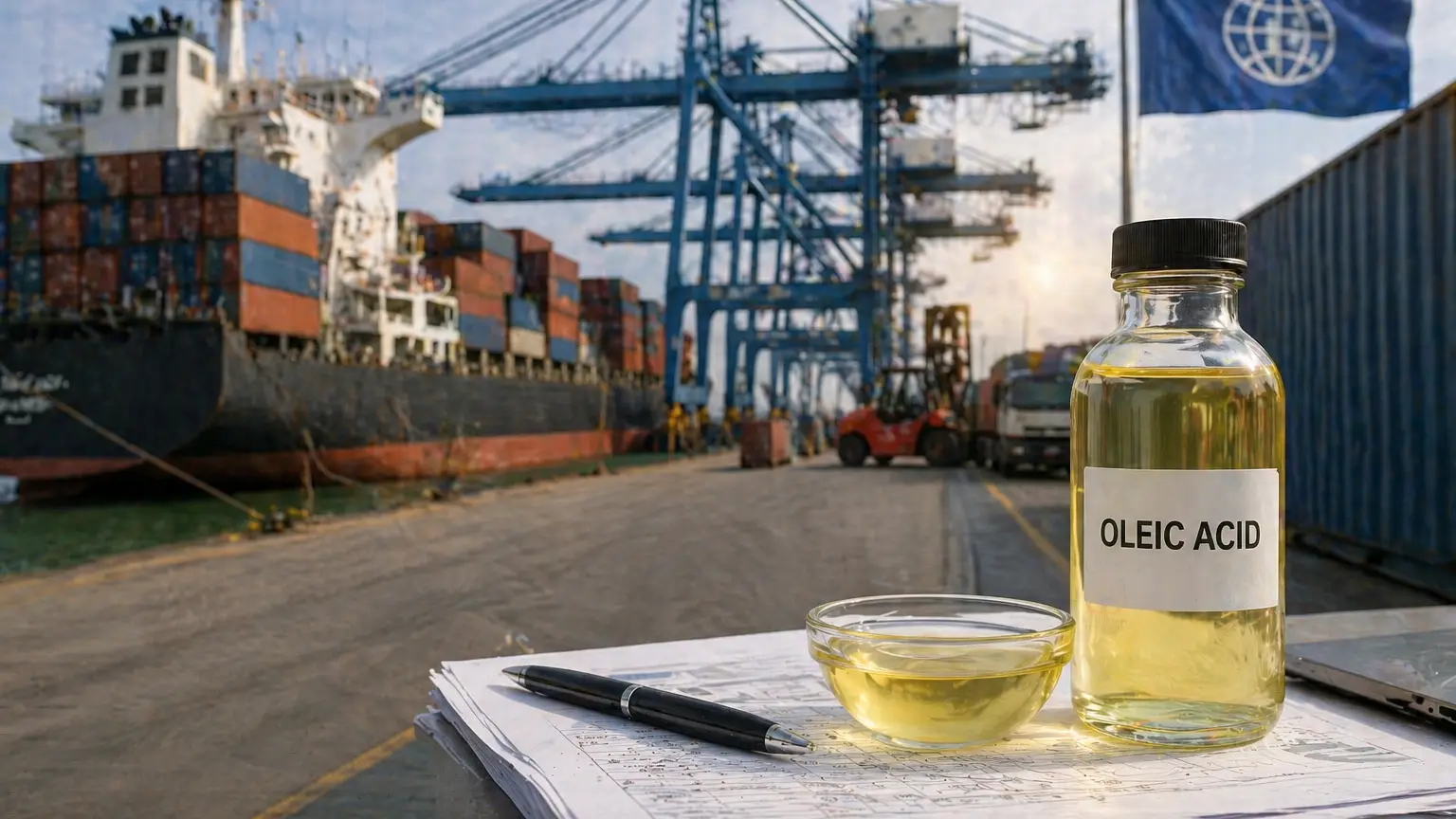
The distribution of oleic acid is a global endeavor, with major production hubs in Southeast Asia (Indonesia, Malaysia), Europe (Germany, Netherlands), and North America (USA). The final product, typically a liquid or semi-solid, is transported in various forms: bulk tankers for large-scale industrial users, isotanks for intermodal transport, and drums or IBCs (Intermediate Bulk Containers) for smaller volume customers. The logistics chain must be carefully managed, as oleic acid can be prone to oxidation and crystallization at lower temperatures, requiring heated storage and transportation in colder climates.
By 2026, the distribution landscape will be shaped by several factors. The push for regionalization, partly driven by supply chain resilience post-pandemic, will lead to the establishment of more local blending and storage facilities. Digitalization will also play a larger role, with platforms like oleicacid.net and Tradeasia providing real-time inventory visibility, automated ordering, and streamlined documentation for customs clearance. Efficient port infrastructure and reliable shipping routes from the major palm oil ports in Malaysia and Indonesia to consumption centers in Europe, India, and China will remain the backbone of the global oleic acid trade. The ability to offer just-in-time delivery and flexible packaging options will be a key competitive advantage.
Market Trends, Pricing, and Regional Dynamics
The global oleic acid market in 2026 is projected to see steady growth, driven by demand from the bio-based lubricants, personal care, and pharmaceutical sectors. However, pricing will remain volatile, closely correlated with the prices of crude palm oil (CPO) and other vegetable oils. The increasing use of oleic acid in the production of bio-based polymers and as a replacement for petrochemical-derived surfactants will create new demand vectors. Regionally, Asia-Pacific will continue to dominate both production and consumption, but Europe and North America are expected to see robust growth, particularly for certified sustainable and high-purity grades.
Another significant trend is the consolidation of the supply chain. Larger oleochemical players are increasingly integrating backward to secure feedstock and forward to control distribution. This vertical integration allows for better cost management and product quality control. For smaller buyers, partnering with established distributors like Tradeasia becomes essential to access a wide portfolio of oleic acid grades, navigate complex trade regulations, and benefit from market intelligence. The regulatory environment, particularly regarding chemical registration (REACH in Europe, TSCA in the US) and sustainability reporting, will continue to add complexity and cost to the supply chain, favoring companies with robust compliance infrastructure.
Conclusion
The oleic acid supply chain in 2026 will be defined by a delicate balance between agricultural volatility, technological progress, and sustainability imperatives. From the careful selection of certified feedstocks to the precision of fractional distillation and the complexity of global logistics, each link in the chain presents both challenges and opportunities. Stakeholders who invest in transparent sourcing, advanced processing technologies, and efficient distribution partnerships will be best positioned to thrive in this evolving market. The future of oleic acid is not just as a commodity, but as a sophisticated, bio-based building block for a sustainable chemical industry.
Disclaimer: This article is provided for informational and market insight purposes only. It is not intended as technical, safety, or professional advice regarding the handling, storage, or application of oleic acid. Readers are strongly advised to independently verify all information with qualified experts, consult official documentation such as Material Safety Data Sheets (MSDS/SDS) for specific handling and safety procedures, or contact our team at Tradeasia for guidance on specific applications and product selection. The market data and trends discussed are based on publicly available information and industry analysis as of the time of writing and are subject to change.
Tags
Most Popular Insights
Don't miss out on our updates!
Subscribe to our newsletter now
We're committed to your privacy. Tradeasia uses the information you provide to us to contact you about our relevant content, products, and services. For more information, check out our privacy policy.